agosto 5, 2026
Brass vs Aluminum Landscape Lighting: Why the Trade Specs Brass (and When Aluminum Wins)
KEY TAKEAWAY: Brass landscape lighting lasts because it patinas instead of corroding. On coastal and high-exposure sites, solid brass fixtures routinely last 10 to 15 years, where aluminum often manages 3 to 5 before the finish chalks and the metal degrades. Brass costs more upfront and slowly darkens over time, which some clients want and some don’t. Marine-grade aluminum with a heavy powder coat is the right call when budget rules or the site is mild. Spec brass for longevity and low maintenance; spec aluminum to hit a price.
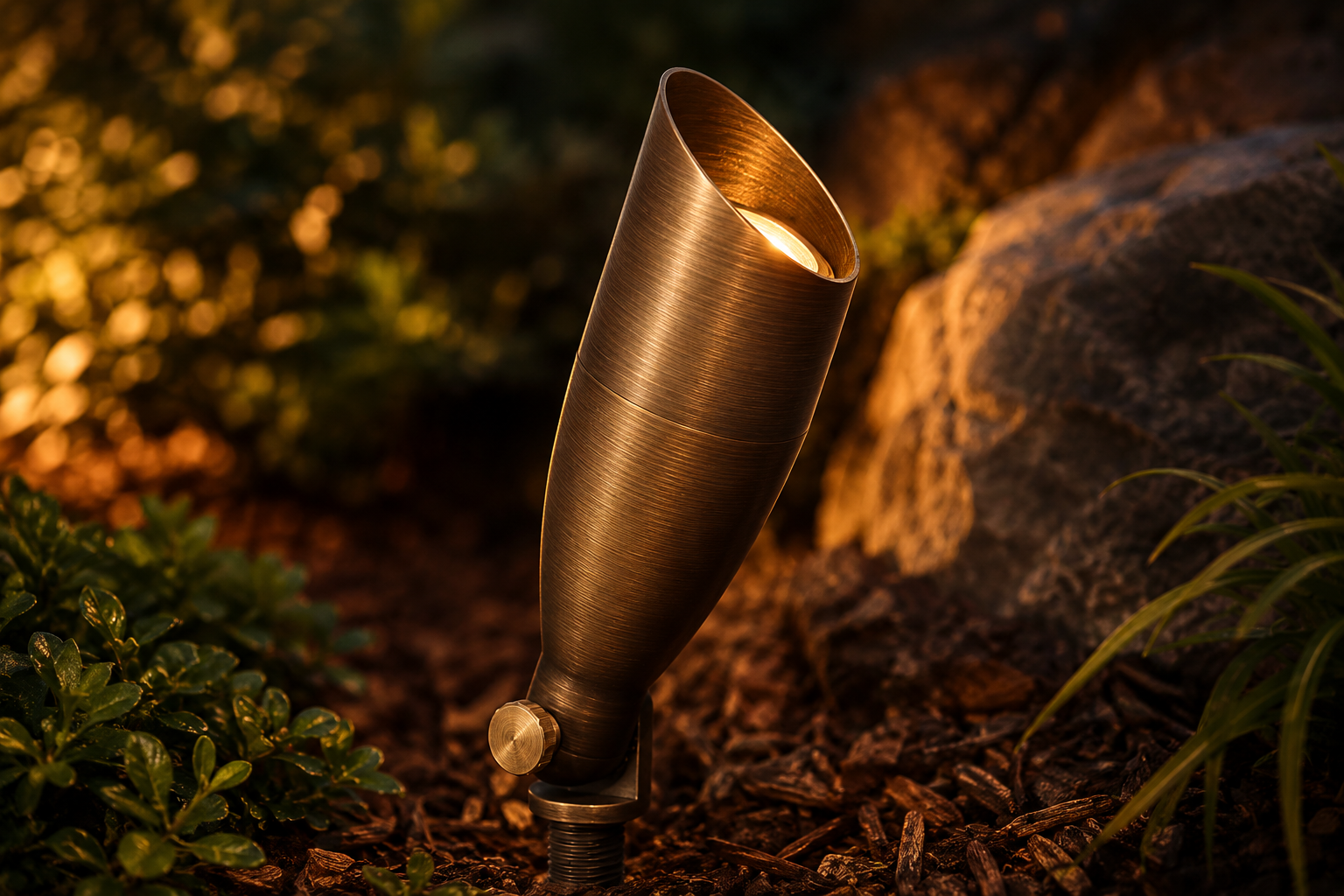
Material is the single biggest decision in a landscape lighting fixture, and it’s the one most likely to come back to bite you. A fixture that looks identical on the shelf can last fifteen years or fail in three, depending entirely on what it’s made of and where it’s installed. For a contractor, that difference is the line between a referral and a call-back.
This guide breaks down brass versus aluminum the way a spec writer thinks about it: corrosion, lifespan, maintenance, cost, and the conditions that decide between them. If you’re spec’ing a larger property, pair this with our commercial landscape lighting guide, and for sizing the runs, the voltage drop and wire gauge guide. Written for contractors and distributors, not homeowners.
Why brass is the trade standard
Brass is the preferred material for professional landscapers and contractors who need fixtures to last on high-value and coastal properties. The reason is simple chemistry: brass develops a natural patina, a thin surface layer that protects the metal underneath from further oxidation. The Copper Development Association found that brass can resist corrosion for over 100 years under normal conditions. In the field, that translates to brass fixtures lasting well over a decade on the coast without visible deterioration.
The trade-off is the look. Brass slowly darkens as it patinas. Some clients love the aged, organic finish; others want it kept bright, which means occasional polishing. Either way, the metal is not failing, it’s aging. That’s the key distinction from aluminum, where surface change means the fixture is breaking down.
Brass also asks for almost nothing in maintenance. It needs no repainting and minimal cleaning, which is exactly why it’s specified on commercial and high-value sites where a maintenance visit is expensive.
Brass vs aluminum: the spec comparison
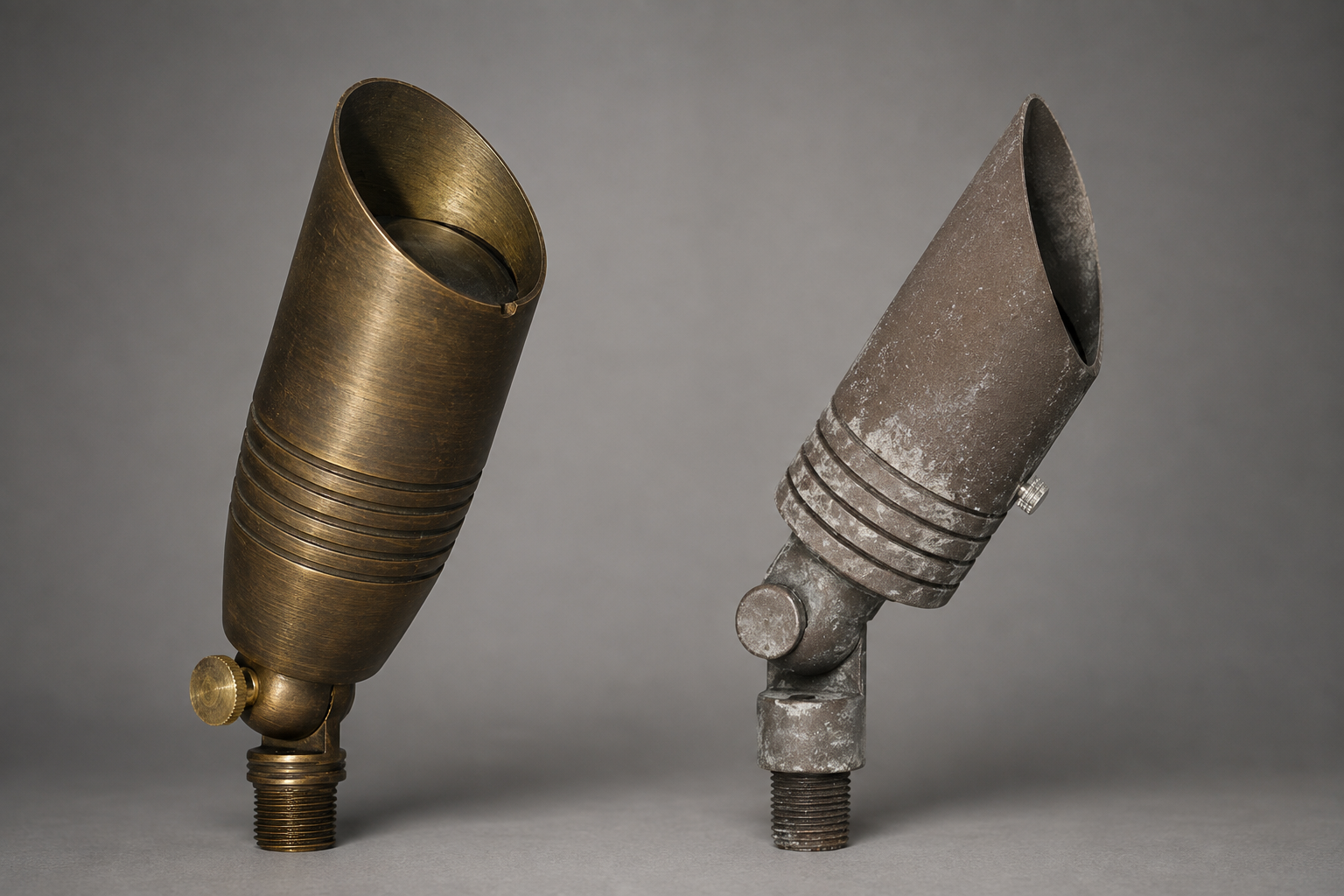
Here’s how the two materials line up on the factors that decide a spec:
| Factor | Solid brass | Aluminum (powder-coated) |
|---|---|---|
| Corrosion | Patinas, does not corrode | Oxide layer breaks down in salt/humidity; chalky white residue |
| Coastal lifespan | ~10–15 years | ~3–5 years |
| Finish over time | Darkens naturally (patina) | Powder coat fades, chips, peels under UV |
| Maintenance | No repainting, minimal cleaning | Repaint/replace as coating fails |
| Upfront cost | Higher | Lower |
| Best for | Coastal, high-exposure, commercial, high-value | Mild climates, budget-driven jobs |
The pattern is consistent across the trade: brass costs more and lasts longer; aluminum costs less and trades lifespan for it. Neither is «wrong,» they’re answers to different questions.
Where aluminum makes sense
Aluminum is not a bad material, it’s a budget material, and there are jobs where it’s the right call. On inland sites away from salt air, in mild climates, or where a client’s budget sets the ceiling, a high-quality aluminum fixture does the job. The thing to insist on is quality: a marine-grade aluminum fixture with a strong, multi-layer powder coat or anodized finish will outlast a cheap aluminum fixture by years.
What you want to avoid is thin, low-grade aluminum with a single coat of paint. That’s the fixture that turns chalky white and starts peeling a few seasons in, because once salt or prolonged humidity breaches the coating, corrosion moves fast and weakens the housing.
So the honest rule: if the site is coastal or high-exposure, or the client wants a decade-plus install, spec brass. If the site is mild and the budget is firm, spec a genuine marine-grade aluminum fixture, not a bargain one.
How to spec brass fixtures
Solid brass, not brass-plated. The longevity comes from the metal being brass all the way through. A brass-plated fixture over a cheaper base doesn’t deliver the same corrosion resistance.
Drop-in vs integrated LED. A drop-in fixture uses a replaceable lamp, so a crew can swap the light source in the field without replacing the whole fixture. An integrated fixture has the LED built in, which can be cleaner and more sealed but means replacing the unit when the LED reaches end of life. On large or hard-to-service sites, drop-in serviceability is often worth it; on sealed or submerged applications, integrated makes sense. Many contractors carry both.
Finish choice. Decide with the client whether they want natural patina (no maintenance, evolving look) or a maintained bright finish (occasional polishing). For a specific color, brass can be powder-coated, including custom PMS matches and ready-stock black.
Where Dauer fits
How you route the wire matters as much as its gauge:
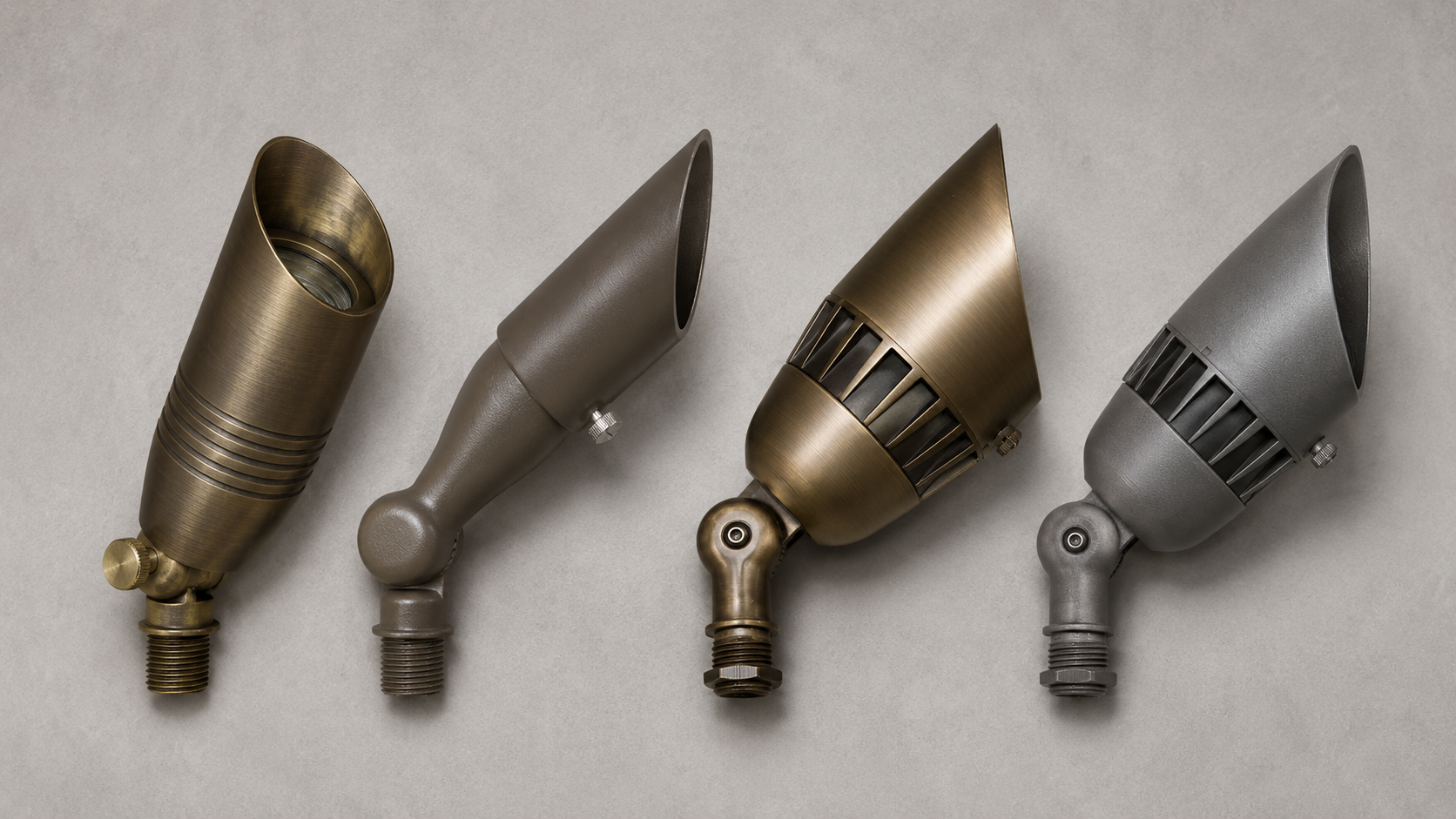
Dauer Manufacturing manufactures low-voltage LED landscape fixtures in both solid brass and aluminum, in drop-in and integrated versions, so you can match the material to the site instead of forcing one spec onto every job. Dauer Power Packs bundle the common combinations: aluminum drop-in, aluminum integrated, brass drop-in, and brass integrated, so a contractor can stock the range. Most products can be powder-coated to a custom PMS color, with some black available from stock.
The fixtures are backed by a lifetime warranty on brass drop-in fixtures, a ten-year warranty on integrated LED fixtures, a five-year warranty on LED drop-in lamps, and a lifetime warranty on stainless-steel transformers. As a US manufacturer marking its 25th Silver Anniversary in 2026, Dauer has manufactured brass and aluminum landscape lighting for the trade since 2001. Whether the job calls for brass that outlives the install or aluminum that hits a number, the line covers both, US-made and built for the trade.
Frequently Asked Questions About Brass Landscape Lighting
Is brass or aluminum better for landscape lighting?
Brass is better for longevity and coastal durability, lasting roughly 10 to 15 years because it patinas instead of corroding. Aluminum is better for budget-driven jobs in mild climates, but a quality marine-grade aluminum fixture is essential, since low-grade aluminum corrodes quickly once its coating fails.
Does brass landscape lighting corrode?
No. Brass develops a natural patina, a protective surface layer that darkens the metal but does not corrode it. The Copper Development Association found brass can resist corrosion for over 100 years under normal conditions, which is why it holds up on coastal sites.
Why does brass landscape lighting turn dark?
That darkening is patina, a natural protective layer that forms as brass reacts with the air and elements. It’s a sign the fixture is aging, not failing. Clients who prefer a bright finish can polish brass periodically, while others let the aged look develop.
What is the difference between drop-in and integrated LED fixtures?
A drop-in fixture uses a replaceable lamp, so the light source can be swapped in the field without replacing the fixture. An integrated fixture has the LED built in, which is more sealed but requires replacing the whole unit when the LED reaches end of life.
Is solid brass worth the extra cost for landscape lighting?
On coastal, high-exposure, or commercial sites, yes. Brass costs more upfront but lasts roughly three times longer than aluminum in harsh conditions and needs almost no maintenance, which lowers the total cost over the life of the install.
Spec the right material for the site
The material decision comes down to the conditions and the client’s timeline. For coastal and high-value jobs, brass earns its cost in years of service; for mild, budget-driven jobs, a genuine marine-grade aluminum fixture does the work. Call 1.888.DAUER.LED to reach your authorized Dauer distributor, or visit DauerManufacturing.com to spec brass and aluminum fixtures for the trade. #PowerOfDauer
WRITTEN BY: Tom Rowe, National Sales Director, Dauer Manufacturing Tom Rowe is National Sales Director at Dauer Manufacturing, a US manufacturer of low-voltage LED landscape lighting. The company manufactures fixtures, lamps, and transformers wholesale to the trade, and has since 2001. Visit DauerManufacturing.com.